
If you are a bassist, you will certainly need a bunch of effects pedals that will let you gte the best sounds out of your instrument. There are also some essential effects pedals that are great to make practice sessions productive, and some you can do without.
In this post, I am going to walk you through the best essential effects pedals for bass guitarists you absolutely need so you can decide for yourself whether they’re worth it.
Also, keep in mind that you really don’t need every single effects pedal out there. Getting the basics- compressor and looper are okay for practice sessions- the more important thing is dedication and consistency in practice.
Most beginners will want to get a compressor, chorus, and overdrive pedal for practice and performance. Exploring options is a great idea but a simple looper pedal will be the most bang for the buck, at least if you’re somebody who would like to improve on the guitar rather than accumulate lots of gears.
I’ve also included a buying guide at the bottom of the list, so feel free to check that out before buying the effects pedal. Let’s get started!
Table of Contents
9 Best Effects Pedals for Bassists

Specifications
- 3 Modes- Normal, MB and Tubesim
- Knobs for gain, sensitivity, and comp
- Operates at 9 -18 V
- Footswitch on a black encasing
What We Think
I think the EBS Blue Label compressor is a fantastic choice for any bass player as it has the MB setting so you can play around with dual-band compression.
You’ve also got knobs for gain, sensitivity, and comp- and the switch for Tubesim is super handy as well. If you like the tube amp sound, which I do- this effects pedal is delightful.
For the price, the Blue Label compressor by EBS is an excellent choice.
At the top of the list, we’ve got a compression pedal- compression and reverb make the most used pedals in any live performance.
Compression is a different kind of effect that is very distinct yet an essential effect for any musician. Basically, all compression does is bring down the louder sounds and boost the softer parts of a song so the resulting sound is a balanced mix.
Dynamics and the overall volume of the mix are something the player should be more concerned about, but if you feel like the recording could use a little touch-up, this can be a great effect to have. Of course, you will want to use the pedal in moderation- learning to play things softer or louder is also the mark of a good musician, so you should definitely work on that.
You can have more control over the sound you are feeding into the band, and compression also kind of works like a sustain pedal like you would find on a piano. This allows for more choices in harmony.

Specifications
- 3 hours of recording time
- 99 memory slots to keep loops
- True stereo
- USB 2.0 port for easy connectivity
- Rhythms included, live drum samples
What We Think
If you are looking for a reliable tool for rehearsals, you will find the RC-3 a fantastic tool that provides three hours of recording time so you don’t have to worry about running out of time, and the 99 memory slots are really something.
The Boss RC-3 is one of my favorite looper pedals, and while it is not a drum machine per se, you will find that the 10 pre-recorded drum loops that come with it are quite handy. You also get true stereo I/O which is something you will certainly appreciate. Connectivity is one of the things RC-3 has really nailed down, and the USB 2.0 port connects seamlessly to other devices including laptops and computers so you can save and edit the loops you have recorded.
As a musician myself, I can tell you that a lot of thought has gone into this looper pedal- you get count-in mode which counts the beats before your part is recorded. The genres are also diverse- including rock, jazz, Latin, and funk.
What I like most about this looper pedal is the tap tempo feature so you can set a tempo for the rest of the parts you are going to record with this. The RC-3 also works like a classic audio player as you can easily load up WAV files on it from your devices and play them. There is a limit on the file size- but 1.7 GB is hardly something you come across when looking for audio files.
It’s intuitive to use, affordable, and built to last which is everything you may want to have in a looper pedal.
We’ve got the looper pedal which is my favorite effects pedal- and for a very good reason. Looper allows you to play and loop parts as you like, and you can layer pieces of songs together so you can improvise over them or use that in a live setting.
Most loopers also let you save the loops in a memory bank, and you also get to record over a loop or pause/resume as you see fit. These effects pedals are very easy to use- all you need to do is put your foot on the footswitch, and save or edit the loops you’ve saved.
You will want to practice your chops with other players, or ideally in a band, but chances are- you cannot find like-minded players all the time, so having a looper pedal can be handy just in case you want to jam along over a track. Looper is one of those pedals that’s more of an investment than just something you need for sounding good.
Over time, and with due diligence, you can practice playing on time and with exceptional finesse. Jamming along to yourself is a great way to find your personal voice on the instrument.
There’s a catch, however, as with any piece of quality gear, you get what you pay for. If you get a cheaper pedal, you will only get about 20 minutes of recording time but with Boss loopers, you can get around 3 hours of recording time which is ideal for jamming, practice, performance as well as practicing songwriting.

Specifications
- Dual circuitry- clean and aggressive
- Can blend between the distinct sounds to get a mix of both
- Bite and Growl controls
- Quarter inch output for connecting to DAW or interface
What We Think
If you are looking for a premium distortion pedal that will make your bass guitar sound punchier, you don’t need to look any further than the Darkglass Alpha Omega distortion pedal.
The Finnish distortion pedal is great; it’s also been used by bassists like Foo’s Nate Mendle and Tony Levin. You will be glad to know that the Alpha Omega distortion pedal is a product of aspirations by both Karnivool and Darkglass.
The best thing about Alpha Omega is- the pedal is not just a grunge pedal, but it’s also a two-in-one kind of effect. The Alpha and Omega in the naming suggest that the pedal features two circuitry that you can choose from, or you can choose a mix of both, whichever you like, and the pedal comes with a knob for just that.
One thing about the Darkglass Alpha Omega distortion that may be a turn-off is the price- it’s slightly pricy but you get what you pay for. It also doesn’t run on batteries, which is pretty common on premium pedals- so you will need a 9V DC adapter or a pedalboard to power it up.
If you are interested in mixing your track after the pedal, you can get a flat boost on your tracks and the best thing about this is probably the 3-band EQ. Most budget pedal effects won’t come with 3 band equalization controls, and of course, you still get the volume and tone control so you can mess around with the output as much as you would like to.
You get quarter-inch inputs and output jacks and also a parallel output jack that comes in very handy for hooking up to a DAW for recording/mixing. There is also an XLR output that can be hooked into a PC or an interface.
Overall, I think the Alpha Omega distortion pedal is a fantastic choice if you would like to customize your tone- the Alpha channel is a lot cleaner than the more aggressive and raw-sounding Omega circuit. The flexibility, build, and usability of this pedal make it one of the best pedals for beginners as you can change up your tone as much as you would like with this- and you can even blend the two sounds together for a richer punchier sound.
Specifications
- Analogue and compact design
- One octave down/ Two octaves down
- Dry volume controls
- Mid-boost feature up to 6dB, 13dB with the internal trim pot
- True bypass circuit
- Quarter-inch input and output
- 9V DC adapter for power supply
What We Think
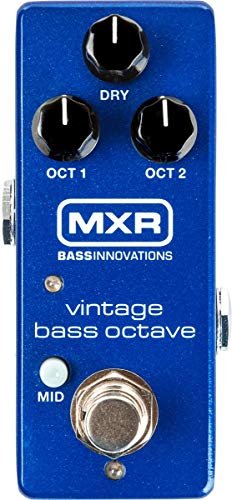
The M280 Vintage Bass Octave is a particularly useful tool when it comes to making your sounds feel heavier/fuller, and you can use this to quickly shift octaves.
The bass octave pedal comes with 3 preset octaves- an octave down and two octaves down, which can come in very handy. There is also the dry volume control that lets you change the volume of the signal without adding effects.
What I like most about this pedal is the mid-boost, which can take the mids up by up to 13dB. It also offers true bypass and the Constant Headroom Technology is a delight to work with.
Overall, I think the MXR octave pedal offers good value for what it costs, and both beginners and players who have been playing for a while can get good use out of it.
The octave pedal is certainly one of the best effects pedals that a bassist can get his hands on. What an octave pedal does is quite simple- it just adds a pitch-shifted signal on top of the normal signal in an octave interval but doing so can result in wonderful sounds including those like a doubled instrument as well as doubling of harmonies that make the low-end more powerful.

Specifications
- Behringer Analog Delay Circuitry
- Bucket brigade technology
- Noise reduction technology
- LED indicators
- Mono input and dual output
- Intuitive controls
- Customizable repeat, intensity, and echo
- DC powered, runs on 9V batteries
- Quarter-inch jack input and two-quarter-inch outputs
- Weighs just 1.15 pounds
What We Think
If you are looking for a vintage delay pedal that’s cheap and reliable, you will dig the Behringer Vintage Delay VD400. The Delay pedal is not only a versatile pedal for both bass and guitar but it’s modeled after the Boss DD-3 pedal, so you can rest assured that you’re going to get fantastic quality out of it.
One thing that I really love about Behringer products is the quality of the materials used- you can be certain that the pedal will last you for years. For beginners, the Behringer VD400 pedal is super intuitive to use as it features just repeat rate, echo, and intensity knobs that are super easy to use.
If there’s one thing that I don’t like about the Behringer delay pedal, it’s the delay time ability which can only be adjusted to just 300ms. With more expensive delay pedals, you can get more delay time capabilities.
The sound you get is the ideal vintage sound you might want- with a wee bit of fuzz added into the mix.
Overall, I think the Behringer delay pedal is a fantastic delay pedal despite the minor flaw, and the fact that it costs just 30 bucks makes it ideal for any beginner bassist out there.

Specifications
- 3 Modes for chorus with vibrato, rate and depth controls
- 1/4 quarter input and 1/4 quarter output
- Bright blue design
- Controls for rate and depth
- LED indicator
What We Think
You might use a chorus pedal to get fuller-sounding parts in songs, and much like the octave and distortion pedal, the chorus pedal is a must-have for any singer-songwriter, and especially for a bassist. The same pedal also works for guitar as well, so if you play both, great!
Boss CE-2W Waza Craft Chorus Pedal is one of the best pedals out there if you are looking to emulate chorus for songs. You may be surprised to know that the CEC chorus ensemble was actually the world’s first pedal to incorporate chorus into it.
What I like about the Boss CE-2W pedal is the bright blue aesthetic.
The sound is obviously pretty great considering it’s a Boss effects pedal- it’s faithful to the CE-2 chorus sound and if you are looking for a stereo chorus that’s production quality, you won’t be disappointed. The durability of these things is pretty high- so the CE-2W will last you for many more years to come.
The Japanese-made Waza Craft Chorus is overall a viable option for both beginners and advanced players alike who would like to have a chorus pedal.
Specifications
- Excellent stereo output for any studio mix
- Signature reverb effects
- Delay and many effects included
- True analog bypass
- USB connectivity
What We Think
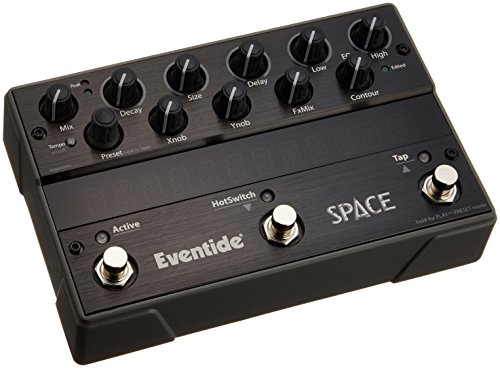
The Eventide Space reverb pedal is one of the affordable pedal effects on this list that features fantastic effects. You get 12 of Signature reverb effects you would find on the Eclipse V4 that sounds fabulous.
What I like most about this reverb pedal is the fact that it’s got presets by bands including Nine Inch Nails, 30 Seconds to Mars, My Bloody Valentine, Smashing Pumpkins and the like. Most players decide to get this effects pedal because of these effects, and you also get tons of effects like pitch shift, delay, tremolo, modulation, and spacial effects.
Overall, I think the Space reverb is a fantastic effects pedal if you’re looking for a budget reverb pedal.
Regardless of the instruments you play, a good reverb pedal is an essential tool in any musician’s arsenal. Simply put, reverb is just the space around your instrument- and while it might be hard for me to explain in text, you will understand when you come across some song that has crazy amounts of reverb.
This is one of the best reverb pedals on the market. It’s cheap, durable, and offers tons of helpful features that will help you instantly sound better on the instrument.

Specifications
- Buffered bypass
- Volume, tone, blend, sustain and gate controls with bypass option
- Standard input and output jacks with XLR DI out
- DC powered, runs on 9V power
- AC adapter sold separately.
What We Think
The Big Muff Pi is a fantastic effects pedal if you are looking for a piece of gear that can help you sound just like the vintage Russian fuzz sound. Deluxe Muff Pi is a name most guitarists have probably heard already- as it was widely used by icons including Jimi Hendrix, Gilmour, and Santana, and though it was originally meant for guitarists, bass players have found a great use for it.
The Big Mass Pi features a beautiful aesthetic- and the pairing of a low gain distortion was an instant hit with guitarists back then.
In 2013, the Bass Big Muff Pi was introduced with a bunch of new features including a foot-switchable crossover feature for adding a low pass filter and high pass filter on dry signals and distorted signals respectively.
As for the controls on this, you get a blend knob that lets you mix dry and distorted sounds, a built-in noise gate that gets rid of any annoying noises, and you’ve also got a -10dB active pickup pad that works like a charm.
If you are looking for a budget-friendly fuzz pedal that won’t put a hole in your pocket, the Deluxe Bass Big Muff Pi comes highly recommended.

Specifications
- A plethora of controls including Home, Amp, Action, Volume for the overall output and headphone volume
- 12 Bass amp models, 37 cab sims, 16 mics and 100+ effects
- Screen for viewing while editing
- Buffered bypass
- Touch-sensitive footswitches and expression pedal
- USB connectivity
- Standard inputs and outputs of quarter-inch jack and XLR audio
- Runs on grounded AC, with no battery support
What We Think
Ready to take a look at a premium effects pedal? Enter the Helix Line 6 processor! This effects pedal is on the pricier side- but if you would like to get a piece of gear that’s very capable, this would do it. Not to mention, it works perfectly for guitars as well as vocals.
What I like most about the Line 6 Helix processor is the sheer number of effects and modeling capabilities it provides. It seems the brand is pushing out new modeling tones with every new update. These types of digital sound emulations are also available as bass guitar VST plugins for direct recording.
Last I checked, you could get 12 bass amp models and 37 cab sims which is everything a beginner bassist would love to get their hands on. The price almost wipes it off the budget playing field but if you can get past that, it’s a worthwhile investment that lasts for decades.
You also get 16 mics and over a hundred effects that are very versatile and will help you regardless of what you intend to play. And the quality is top-notch. You will dig the modern take on the aesthetic. The aesthetic on these Line-6 models is something the brand never seems to mess up, and that’s awesome for us.
The fact that Line 6 processor supports up to three expression pedals makes it very to use for any of your old-fashioned equipment you might have laying around. The processor is most certainly amps modeling haven and over a hundred effects on this will certainly make you very happy. There are endless possibilities and this might just help get your creative juices flowing. The processor is also great for tweaking up complex signal paths that wouldn’t be otherwise possible to experiment with.
Line 6 is a premium tool, and the features clearly reflect that. It’s also possible to have multiple players route the processor for their instruments and play these instruments simultaneously. It works like a charm for recording improv sessions as well, and if you’re looking for an excuse to buy one of these, you can always learn to mix and master your own. For the uninitiated, this effects pedal can be a fantastic choice.
If you are serious about recording and editing bass parts, you will find the Line 6 Helix processor a fantastic choice but do keep in mind that most beginners won’t be needing this processor, nor do they have the budget to afford of these bad boys.
What Order Should You Place Effects?
It’s kind of a personal preference where you put your effects but if you are a beginner, it can drastically change the sound output.
Typically, I would place my pedal effects in the following order: bass, compressor, volume pedal, wah, distortion, chorus followed by tremolo, and delay, reverb fed into a mini amp.
The order of effects in the signal chain might be pretty confusing- I’ve placed those effects first that don’t have anything to do with the time. Delay and reverb affect the time, so they come last- if you would like to add in a compressor after these, feel free to experiment all you want. Over time, you will have a personal taste that dictates what you like and what you don’t.
If you have a favorite player, taking note of the order of effects they use in their setlist of songs is a great idea. It can help you sound just like them, and it also helps to see why it sounds the way it does.
Final Thoughts
So far, we’ve looked at some of the best effects pedals in the market for bass players. There are a plethora of pedals out there, so the wise thing to do would be to choose only the ones that would provide the most value in your playing.
Personally, I like using a looper pedal to record something that I can later improvise over, or use that in gigs, and compressor and overdrive are my other favorites. Every musician has a different taste in pedals, so you just need to experiment with pedals to see what you like.
Effects pedals are a great thing for performing musicians. They can also mask some of the tiny imperfections in your playing and leave the audience wanting for more. That said, you should practice the bass guitar without too many effects as you might fall into a habit of overusing pedals and using tools like reverb and delay to hide your mistakes. Personally, I like to practice without any effects pedals- except the looper pedal which is there to help me create loops to improvise over.
Once I’m happy with I’m practicing, only then do I move on to using effects. Doing this has been very beneficial to my progress- and I would suggest doing the same for any players who are getting started with the exciting world of pedals and effects.
Along with quality effects pedals, decent quality headphones are also essential equipment for bass guitarists. If you would like to take a look at the best headphones for bass guitar practice, kindly check our post on that.
If you liked this post, please consider bookmarking our site, the shortcut is Ctrl + D.
Frequently Asked Questions
What pedals should every bass player have?
We don’t recommend players to get Gear Acquisition Syndrome by trying to horde lots of gears. The essential pedals every bass player should have are a tuner, a compression, an octave, and an overdrive/distortion. These will get you by most gigs and even if you are a beginner, you can get some excellent value out of these sounds.
Can guitar pedals be used for bass?
If you’ve already got guitar pedals or a guitar amp lying around, you can use those for bass without any problems. This also means that you can use bass pedals interchangeably for guitar as well.
This is possible because pedals don’t really care much about what kind of instrument you hook them up to, they just care about digital signals, and as long as you’re passing proper audio signals, they will do their job. A word of advice though, don’t go around flaunting your pedals to the guitarists in your band as they may want to borrow your effects pedals and not return them.
What does a compressor pedal do on the bass?
On both the bass and the guitar, the compressor pedal controls the dynamic range of the instrument. If there are soft sections in the signals, the compressor pedals make them louder and if there are loud sections, those ones are toned down.
So, the resulting sound is a bit more balanced and neither the high end nor the lower is over the top.
Do you need a compressor for playing slap on the bass?
You don’t really need a compressor to slap on the bass much like you don’t need to have effects to get audible tapping on a guitar. Dialing the gain all the way up helps get clearer taps, and very similarly, players find that compressor can help get clearer slap sounds.
This is because a compressor makes the soft sounds louder and loud sounds softer, so bassists can get a punchy slap sound that is rather smooth.
How do I make a bass guitar sound deeper?
Most of the time, the tone on a bass guitar is due to the amp. You cannot get a rich and supple bass tone without upgrading your amp, and sadly, this can cost lots of money. Fortunately, there are two easy things you can do to get a deeper sound. Investing in a quality bass preamp can also significantly enhance your sound and give you more control over your tone.
The first obvious thing to check for is the strings. Maybe your strings are too old and are messing with the tone.
The other thing you should try is using a low-pass filter to optimize your sound for recording bass guitar. Low-pass filters don’t allow higher frequencies to pass through, so you just get the low-end of a mix. After passing through the filter, the resulting sound can be fed to the filter resonance to get a nice balanced sound.