
Table of Contents
What is delay?
In layman terms, delay just means something that sounds like echo. The two are very similar but quite different too. You get many controls on the pedal you get, and those controls can help you customize the sound any way you like. There is also something called feedback that allows you to control the repeating sounds. Something that you will likely come across while choosing delay pedals is the tap tempo feature. It is just a handy way to put your tempo inside the delay pedal. If you are trying to emulate the sound of greats like Radiohead, The Beatles, Queen, Nirvana, U2 and many more, you will find the delay pedal very helpful. Due to very high demand among guitarists, delay pedals are available in many different varieties- and whether you just want a budget delay pedal or a fancy one with bells and whistles, you can find just the delay pedal you want if you search a bit. Some amps do include delay controls, so you won’t have to look for an additional delay pedal. But in my personal experience, having a delay pedal that I can control with a footswitch can offer more versatility to my playing.Delay types
There are many different delay pedals available, so it’s a good idea to take a look at the types of delay available for you before getting into the product specifics.Old-fashioned Tape Delay
The first type of delay that you will find is called the tape delay. The name actually comes from the tedious process of having to record something into tape, and when you needed delay, you would actually play the tape. If you know anything about tapes, you will remember that tapes do not produce constant tempo, so what you get was something that was slightly sped up sometimes and slightly slow-tempo sometimes. It’s not all bad- as tape delay can provide you with a unique tone, and when you’re using tape delay, your sound gradually becomes warmer and richer over time. You don’t have to worry about sounding messy though- as the modern technology these days takes good care of that.Analogue Delay
If you want something reminiscent of the eighties era of rock N roll, you won’t find anything more iconic than the analogue delay. Like I said, tape delays used to be unreliable- and how people solved the issue was by using capacitors in the circuitry- and the effective circuitry is called ‘bucket brigade circuitry’, which has been replaced by Digital Signal Processing these days. Oh, you also get warm tones with analogue delay as when signal is transferred from one component to the other, it slightly degrades.Digital Delay
Today, digital signal processing has replaced most of the Budget Brigade Devices, and what that means is that you get the power of modern-day technology on top of the analogue circuitry. The benefit to that is, you can get a much longer time on the delay as compared to the 5 second limit when using an analogue delay. So, if you are looking for the delay longer than most delay pedals, going for a digital delay pedal would be a great idea. There is a lot of versatility that you can get with digital delay pedals, and if you know a bit about electronics, tweaking up the sound by messing with the electronics can be fun too.Choosing The Best Delay Pedal
Getting the best delay pedal can depend on a number of things. The first, and the most obvious one- is the style of music that you want to play. The next important factor could be whether you want to go for a vintage or a modern feel. Tape and analogue delay pedals are great if you want a 60s or 70s vintage tone. Looking for a delay pedal that also features tap tempo is a good idea, as that will help you get a delay that feels more in time with your playing. However, if you would like more flexibility and signal integrity to not drop down so fast, a digital delay would be the best option for you. Now that we have actually covered a bit about delay pedals, let’s get on with the reviews. Notice that the list isn’t in any order of popularity or based on the value each individual pedal offers. You will find that certain brands offer more value and are more expensive while other brands are cheaper, and hence- offer less in terms of the features you are getting. But for a beginner, the latter might be more suited, and for a more seasoned player, getting a delay with more bells and whistles can be a better idea. For a more comprehensive understanding of how to shape your sound, explore the diverse range of guitar effects pedals available.What is the best delay pedal?

9.8/10 Our Score
What We Like The first delay pedal on the list is the fantastic Boss DD-8 which looks sweet! I find that the first impression of a pedal matters a lot when you are going to be using the delay pedal on a regular basis. If it feels boring and bulky, you probably wouldn’t use it as much as you would if it were slim and stylish. You get tap tempo, looper, footswitch support, and tons of features which puts this pedal in a different league than most delay pedals. What I absolutely love about this pedal is the fact that you are getting 11 different modes and 10 unique delay types. The absolute banger on this has to be the looper which is a fantastic feature that will be very helpful for beginners and pros alike. Talking about the looper, you can easily record about 20 seconds which can be sent to an output device using the mono output jack. The controls are easy- you get level, time, and feedback, and there is also a tap tempo which just means that you can tap the rhythm of your playing and the delay is automatically adjusted to that tempo. The working is very simple and is also one of the things that I like most about this delay pedal. Despite the wide variety of features on this, at its core- it’s a basic delay pedal that is super easy to get familiar with. If you are using feedback and time control settings on this, you can produce many different sounds. I find that using the looper can take over the time and feedback effects, which is a handy feature. I also like that the Boss DD-8 delay pedal can be used either with a power adapter (sold separately) or with batteries- which can come in very handy if you want to use it along with wireless gear. Even if you don’t use the AC power supply much, it’s a great idea to invest in the Boss power adapter so you don’t need to worry about running out of batteries while performing. There is also a battery power indicator on this delay effect pedal that lets you know the amount of charge remaining in the batteries. If you’re running out of batteries, the lights on the indicator LED will begin to fade which will let you know that you need to swap them out. It can be a relatively easy task, but you don’t exactly want to swap the batteries by removing the pedal from the pedalboard during the gig, so it’s a great idea to have power adapters available. The Boss DD-8 delay effects pedal has many different effects and delay settings to choose from. I want to give you a brief idea of what you will be getting- analog, shimmer, reverb, modulation, warp, tape, standard, reverse, warm, and glitch. These aren’t all the effects that you can get on the Boss DD-8 but pretty much sum up the gist. We’ve covered the tape and analog delay previously, so these two just mean the type of delay you are getting. The standard option means the modern digital delay that lets you adjust the time up to 10 seconds which is great. If you are after a warm and mellow sound, you could go with the tape delay. One of my favorite things about the Boss DD-8 delay pedal is the fact that you can use it with an external foot-switch pedal, which will definitely be useful to you if you like changing effects while playing. It makes no sense to use a pedal if you actually need to adjust the controls with your hands every time you need to change something like, say the tap tempo. There is also a dedicated warm option for warmer sounds, which you should definitely look into. Oh, and the interesting glitch option lets you produce a glitchy sound. My descriptions may not do the effects justice- and you should try each option to hear how it actually sounds to you. I also love that the effects on this can be further customized by using the feedback and level knobs. You can tweak around with the settings and come up with a sound that you love in no time. You also get a handy toggle which does a great job at preserving the settings that you’re on before turning it off. This can help you practice efficiently without having to re-adjust the controls and effects. So, is it a good option for beginners? I would say that the Boss DD-8 is a great option for players who want a versatile and flexible delay pedal. Not only are you getting tons of effects at a very low price, you are also actually paying very little- nearly 170$ for this pedal which is great.
9.6/10 Our Score
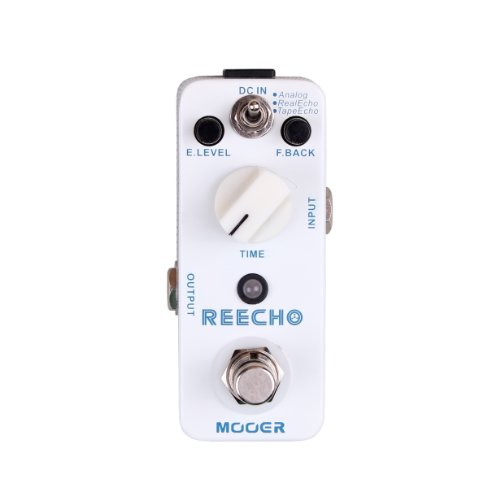
What We Like If you are a fan of cool aesthetics, you will love the Mooer digital delay pedal as much as I do. The looks on this are amazing, and even if you’ve never used a delay before, this pedal will certainly appeal to you. Drooling aside, the Mooer MDD1 delay pedal is a compact piece of gear that provides many features in a solid body. What I like most about this delay pedal is the fact that you can fit it anywhere- even in the small space of your pedalboard, and that also means that you can easily put it in a corner of your van when you are going out to a gig. For a budget pedal, the build is top notch and you get the metal body. Unlike with the Behringer pedal that we described above, you don’t get any hiss or annoying background sounds with the Mooer MDD1 Reecho pedal which is great. If there’s one thing that I wish this pedal had, it’s the ability to be powered by batteries. You cannot use batteries with this, and pretty much the only option you have is the power adapter which is sold separately. You get three basic modes- tape and analog echo which can be very helpful if you would like vintage tone out of this delay pedal, and if you are more into the fat tone, you can go for the real echo. I also love that you can set the delay on this anywhere between 5ms to 780ms. For a beginner, I think it’s more important for the pedal to feel easy to use. Flexibility is something that is more important for players in the intermediate category, and if you aren’t playing for gigs, you can have tons of fun playing around and exploring what a basic delay pedal can do. As for the controls, you get echo, feedback, and time control knobs. The echo control does just what it’s supposed to- it controls the dynamics, the feedback is there for adjusting repeats, and time knob is handy to adjust the time between individual repetitions. The Sound? It sounds amazing. It can be used to play anything from Nirvana to Pink Floyd, which is pretty cool. Since you have got the controls, you can also shape the tone any way you want- and go for your own personal voice. There is also a reverse feature on this. You aren’t getting a tap-tempo which would have been a great addition but since it’s not there, you will have to improvise with what you are getting. Why would you want to go for this? The Boss DD-8 certainly has all the features you might ever need but it also costs twice as much as the Mooer MDD1 Reecho Digital Delay. If you don’t have a lot of budgets and want to opt for something with a bit more value than Behringer’s Vd-400, I would highly recommend you to get this delay effects pedal at just 65$.
9.4/10 Our Score
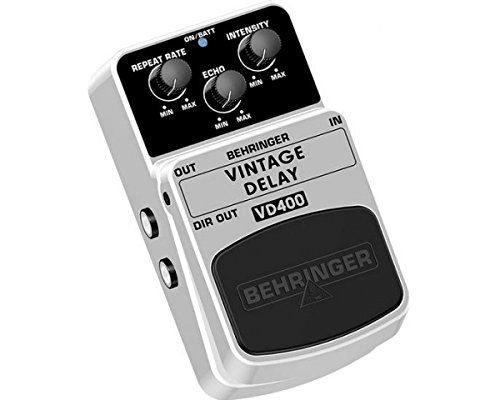
What We Like Next, we have the Behringer VD-400 delay pedal which isn’t as feature-rich as the Boss delay pedal that we have talked earlier about, but it’s certainly not a bad choice as it offers incredible value for the price. The best thing about this delay effects pedal is that it’s dirt cheap- it only cost about 30 bucks! Even if you forget it at your friend’s, you can always get a new one for next to nothing. It’s actually one fo the cheapest options available on the market if all you want is a budget delay pedal that just gives you delay. I probably wouldn’t recommend it for anybody looking to upgrade as you aren’t getting that many features on this. But if you just want the basic delay and don’t want to pay much, you are getting the best deal out there. If you are somebody who likes stomping hard, I would highly suggest you get the Boss DD-8 delay pedal as it can take a beating thanks to the solid construction. The Behringer delay pedal is built with beginners in mind, and if you abuse it, it won’t take much beating. I don’t think this is much of an issue for me as I take care of my gear, but for some guitarists, this can mean huge problems in the future. Do you get any controls on this? Yep, you do get control knobs for delay, echo, and intensity. These controls may not be much compared to a feature-packed delay effects pedal, but they do a good job at controlling the dynamics and number of delay repetitions on your sound. If the genre you want to play is neo-classical or jazz, I certainly wouldn’t recommend this pedal but if you are just looking for a way to recreate vintage sounds, the Behringer VD-400 will be great for you. You can vintage sounds similar to that from tape delay as well as from the analog circuitry very easily. If there’s one thing I like about this delay pedal other than the price, it’s got to be the warmer tones out of this. You also get the dual mode of power supply which means that the delay effects pedal can either be powered by batteries or with the separately sold power adapter. Of course, you need to get the adapter yourself but that’s a non-issue for the price. There is also an indicator LED on this that accurately tells when you are running out of charge. Now, you’ve got two options-either keep replacing the batteries or opt for the power adapter. Personally, I lean towards the latter but you can actually get rechargeable batteries so you don’t have to go looking for new batteries every time the old ones run out of charge. Who should get this pedal? Well.. if you are a beginner and want to save up some money for better strings or for upgrading the pickups on your guitar, the Behringer VD-400 is your friend. If you do get this, you just need to be careful not to break this as the plastic casing can be very fragile.
Conclusion
There are tons of pedals with surprisingly similar offerings, and finding the right piece of gear can be quite a challenge. For musicians looking for portable practice solutions, exploring the best mini guitar amplifiers is also a great option. If you go through the list after reading our guide to choosing the best delay pedal, you will have a solid idea as to what kind of delay pedals would be good for you, and what you should avoid. If you are looking for a cheap pedal, the Behringer or Mooer Reecho would be perfect for you. However, if you want the best value for your money and don’t mind paying a bit more, you won’t be disappointed by the Boss DD-8 delay pedal. I know that I may be biased towards the Boss DD-8 but that’s only because it’s amazing in being able to deliver all that it does in a reasonable price. I hope that this read has been helpful to you in some way.Frequently Asked Questions
Which is the best delay pedal for beginners and intermediates?
I would say that the Boss DD-8 is a fantastic delay pedal for anybody looking for an awesome delay pedal on a budget. It’s feature-rich, compact, super versatile and looks cool as well.Do you need a delay pedal?
If you are just a beginner, you should probably look into a looper pedal. But if you are loking to make your playing more expressive and robust, a delay pedal just might do the trick.Exploring Essential Pedals for Bass Guitar
Beyond general guitar effects, bassists often seek specific essential effects pedals for bass guitar to define their sound. Pedals such as compressors, octavers, and overdrive units are crucial for adding depth, punch, and growl to basslines. These specialized bass guitar accessories can dramatically alter tone, allowing players to carve out their unique sonic space in a band mix. Whether aiming for a tight funk groove, a powerful rock bottom-end, or experimental textures, understanding and utilizing these dedicated bass gear options is key for advanced playing and creative expression.